


Table of Contents
- What Makes a Unique Poster Worth Buying Online
- Limited Edition Fine Art Prints vs Posters: Key Differences
- How to Choose Art Prints for Home Decor That Actually Work
- Types of Online Shops Selling Unique Posters: A Comparison
- Material Quality, Paper Types, and Sustainability
- How to Frame Contemporary Art Prints at Home
- Shipping, Returns, and Buying with Confidence
- Conclusion
Last Updated: August 23, 2026
Finding genuinely distinctive wall art online is harder than it sounds. Most searches lead to the same mass-produced prints cycling through dozens of storefronts, printed on thin paper with colors that fade within a year. At Filipp Jenikae Art Prints, I've spent years thinking about what separates a poster worth owning from one that ends up in a closet. The answer almost always comes down to three things: the quality of the source artwork, the integrity of the printing process, and whether the image actually has something to say.
This guide breaks down the best online shops for unique posters, what to look for before you buy, and how to make art work in your actual space.
Quick Picks:
- Best for artist-created contemporary prints: Filipp Jenikae Art Prints, original artwork, museum-quality production, city and culture themes
- Best for print-on-demand variety: Large open-marketplace platforms, enormous selection, variable quality
- Best for curated independent art: Boutique artist shops and gallery-affiliated stores, editorial curation, limited editions
What Makes a Unique Poster Worth Buying Online
A unique poster is one where the image itself couldn't have been made by anyone else. That rules out most of what gets sold online.
Gallery-Quality Printing vs. Mass-Produced Wall Art
Gallery-quality fine art prints use archival pigment inks on acid-free paper with high gsm weight, holding color integrity for decades (peer-reviewed research). Mass-produced alternatives use dye-based inks on lighter stock; colors shift within years, especially in rooms with natural light (peer-reviewed research).
Giclee printing is the standard for serious art reproduction, using microscopic ink droplets to render fine gradations of tone and color that offset printing cannot match. If a shop doesn't specify giclee or archival pigment inks, assume they're using a cheaper method. The paper finish matters too: matte finish papers reduce glare and give prints a fine-art feel closer to an original painting, while satin finish papers offer slightly more color saturation and subtle sheen.
Art Authentication and Licensing: What to Verify
Before buying any print online, confirm that the shop is selling authorized reproductions. Print-on-demand platforms that allow open uploads are particularly prone to unlicensed reproductions of other artists' work.
Look for these signals:
- The shop identifies the artist by name and provides context about the work
- Limited editions come with edition numbers and, ideally, a certificate of authenticity
- The artist or publisher is clearly identified as the rights holder
When you buy directly from an artist's own store, you sidestep the licensing question entirely.
Limited Edition Fine Art Prints vs Posters: Key Differences
Limited edition fine art prints and open-edition posters serve different purposes.
Limited edition fine art prints are produced in a defined, finite run, often 50, 100, or 200 copies. Each print is numbered (e.g., 12/100), frequently signed by the artist, and produced to archival standards. They hold or appreciate in value over time, particularly for artists with gallery representation.
Open-edition posters are reproduced without a defined limit. They're more accessible in price but carry no scarcity value and are rarely produced to the same material standard.
| Feature | Limited Edition Print | Open-Edition Poster |
|---|---|---|
| Production run | Fixed (e.g., 50-200) | Unlimited |
| Signing | Often artist-signed | Rarely signed |
| Paper quality | Archival, high gsm | Variable |
| Ink type | Archival pigment / giclee | Often dye-based |
| Collectible value | Yes, can appreciate | Minimal |
| Price point | Higher | Lower |
| Best for | Collectors, serious decor | Casual decoration |
If you're furnishing a space you care about, a limited edition print from an artist with a defined body of work is a better long-term investment than a cheap poster.
How to Choose Art Prints for Home Decor That Actually Work
Most people approach art buying backwards. They find a print they like, buy it, and then try to make it fit their space. The result often fights with everything around it.
Visualizing Art in Your Space Before You Buy
Print a scaled black-and-white version at home, tape it to the wall, and live with the placement for a day. This reveals problems with scale, height, and visual balance that are impossible to anticipate from a product page. Some shops offer augmented reality or room visualization tools, though color rendering on screen rarely matches the final printed piece exactly.
A common mistake is buying art that's too small for the wall. For a standard sofa wall, a single print should be at least 60-70% of the sofa's width to anchor the space. Above a desk or console table, the print should sit within 6-8 inches of the furniture below it.
City-inspired prints with strong vertical compositions, like Brooklyn Downtown or Taipei Life, tend to work particularly well in narrow spaces or as anchor pieces in rooms with tall walls.

Types of Online Shops Selling Unique Posters: A Comparison
Three distinct categories of online shops sell unique posters, each operating on a fundamentally different model.
Print-on-Demand Platforms
Print-on-demand platforms allow any designer or photographer to upload artwork and sell prints through a shared marketplace. The model produces enormous variety across every conceivable style and subject. The tradeoff is quality consistency. Because the platform prints on demand from uploaded files, there's no editorial curation of image resolution, color calibration, or artistic merit.
These platforms suit buyers who want affordable art for low-stakes spaces, a rental apartment, or a teenager's bedroom.
Independent Artist Shops and Curated Collections
Independent artist shops and gallery-affiliated stores represent the opposite end of the spectrum. Every print comes from a specific body of work, produced to a defined standard, and sold with the artist's direct involvement.
Filipp Jenikae Art Prints sits in this category. Every print originates from original paintings, produced on thick matte paper using archival pigment inks. The city-inspired series, including Le Zebre - Boulevard de Belleville and Napoli I, captures specific urban moments with an expressive visual style that mass-produced wall art cannot replicate. The collection has been represented by galleries in Hong Kong, Paris, and the United States, with original works auctioned at Sotheby's and Christie's.

Digital Downloads vs. Physical Prints
Digital downloads offer immediate access and flexibility; you buy the file and print it locally or through a print shop of your choice. The advantage is cost and speed. The disadvantage is that local print quality varies enormously, and you're responsible for paper selection, color calibration, and sizing.
Physical prints from reputable shops arrive color-calibrated, printed on specified paper stock, and ready to frame. For anyone who cares about the final result, the physical print from a shop that controls its own production is the more reliable choice.
Material Quality, Paper Types, and Sustainability
Paper quality is the most underspecified aspect of online poster shopping. Most product pages list a paper weight in gsm (grams per square meter) and a finish type, but few explain what those numbers mean in practice.
For reference:
- 170-200 gsm is standard for everyday posters. Adequate, but prone to curling and lacks the tactile weight of fine art paper.
- 250-300 gsm is the range used for serious art prints. The paper feels substantial, holds ink without bleed, and resists humidity-related warping.
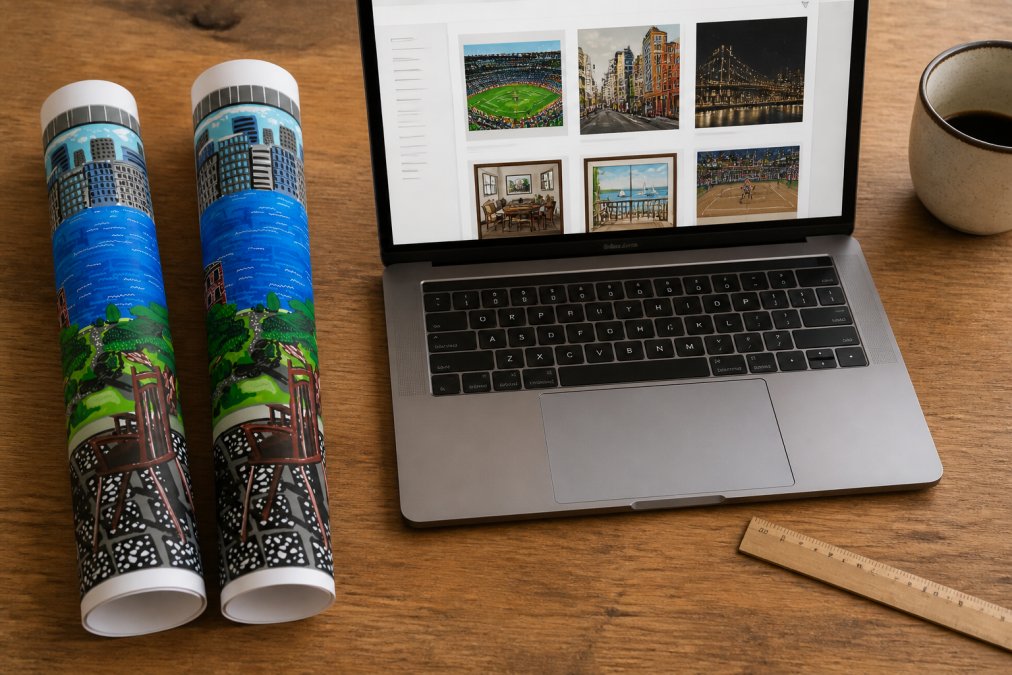
- Above 300 gsm is gallery territory, with genuine heft and surface texture that adds dimension to the printed image. high quality decor.
Archival paper is acid-free and lignin-free, meaning it won't yellow or become brittle over time (peer-reviewed research). Non-archival paper begins degrading within years, regardless of ink quality.
On sustainability: the art print industry has moved toward eco-friendly production in recent years. Look for shops that use FSC-certified paper stocks and water-based pigment inks, which have significantly lower environmental impact than solvent-based alternatives.
How to Frame Contemporary Art Prints at Home
Framing is where many buyers lose the gains they made by buying a quality print. A poorly chosen frame can flatten a strong image; the right frame makes the print feel finished and intentional.
Framing Options for Matte and Satin Finish Prints
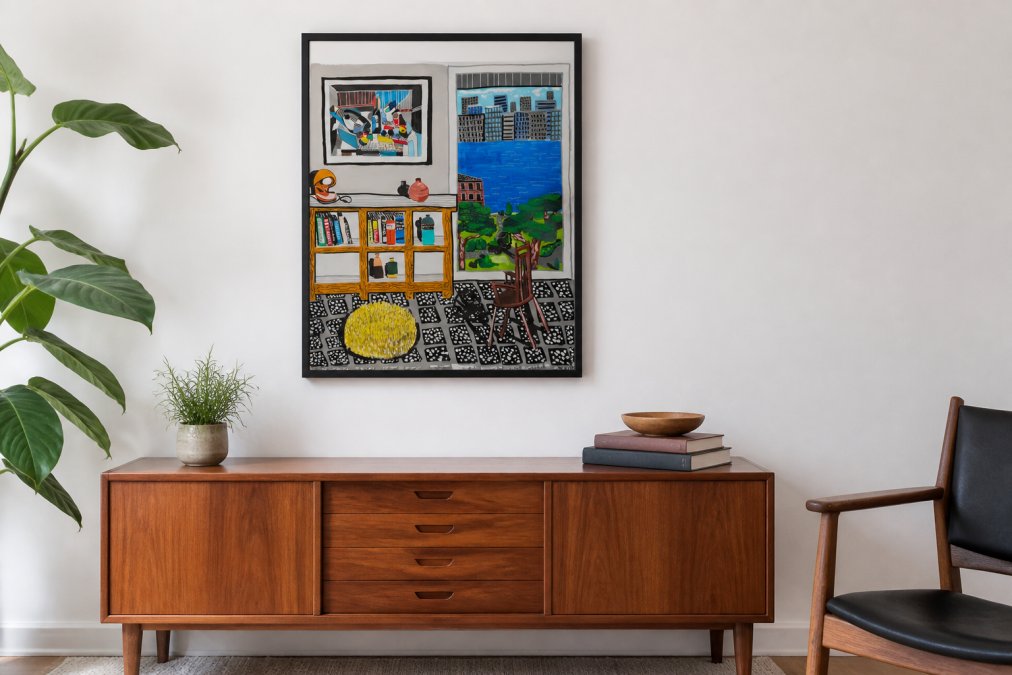
Matte finish prints pair best with frames that don't compete for attention. Thin metal frames in black, brushed aluminum, or warm gold work well. Avoid ornate carved frames, which tend to make contemporary art look misplaced.
For matte prints, glazing is optional but recommended for high-humidity rooms or prints near windows. Use UV-filtering glass or acrylic rather than standard glass to prevent color fade. Anti-reflective glazing is worth the extra cost for rooms with strong directional lighting.
Satin finish prints can tolerate slightly more decorative framing because the finish itself adds visual interest. A wider mat board in white or off-white creates breathing room between the image and the frame edge, the standard gallery presentation for a reason.
Building a Wall Gallery: Arrangement Ideas
A wall gallery works when the pieces share at least one unifying element: color palette, subject matter, frame style, or paper finish. Mixing everything produces visual noise rather than a curated collection.
For a cohesive gallery wall:
- Choose a consistent frame style (all black, all natural wood, or all metal)
- Vary the print sizes but keep the arrangement within a defined boundary shape
- Leave consistent spacing between frames, 2-3 inches for a tight gallery feel; 4-6 inches for a more relaxed arrangement
- Anchor the arrangement with the largest piece slightly left of center
City-inspired prints from a single series work particularly well as gallery groupings. A combination of Brooklyn Dumbo, Brooklyn U, and San Francisco creates a travel-narrative grouping with visual coherence.

Shipping, Returns, and Buying with Confidence
The most common complaint about buying art prints online is damage in transit. Quality shops use rigid tube packaging for rolled prints or flat-pack with cardboard reinforcement for smaller sizes. Ask about packaging before you order if the shop doesn't specify it.
Return policies vary significantly across shop types. Print-on-demand platforms typically offer returns only for damaged or defective items. Independent artist shops tend to offer more flexibility.
At Filipp Jenikae Art Prints, every order ships free internationally with a 30-day return window. If a print arrives damaged, or if it simply doesn't work in your space, the process is handled directly.
A few practical checks before completing any art print purchase:
- Confirm the paper gsm and ink type are specified
- Verify the shop identifies the artist and confirms licensing rights
- Check whether the edition size is stated (for limited editions)
- Read the return policy in full, including who covers return shipping
- Confirm packaging method for large or rolled prints
- Look for real customer reviews that mention print quality specifically
Conclusion
The gap between a forgettable poster and a print that genuinely changes a room comes down to the source artwork, the production quality, and whether the shop stands behind what it sells. Mass-produced wall art fills walls; artist-created prints anchor them.
Filipp Jenikae Art Prints offers museum-quality fine art prints produced on thick archival matte paper, with free international shipping and a 30-day return policy. Every piece originates from original paintings capturing city scenes and cultural moments. Browse the collection and find the print that fits your space.
Frequently Asked Questions
What should I look for when buying high-quality art prints online?
Check that the shop specifies archival pigment inks and thick matte or fine art paper, these two factors determine both color richness and longevity. Look for high-resolution source files (300 dpi minimum) and giclee printing methods. A clear return policy, genuine customer reviews, and transparent information about who created the artwork are also reliable trust signals. Shops run by the artist directly tend to offer better quality control than generic print-on-demand marketplaces.
How can I tell the difference between mass-produced posters and artist-created prints?
Mass-produced posters are typically printed on lightweight paper with standard inks and sold across dozens of platforms without any connection to the original creator. Artist-created prints come with a traceable artistic direction, often include a certificate of authenticity or edition numbering, and are produced in limited runs. The description should name the artist, explain the work's concept, and specify print materials. Generic stock imagery with no attribution is a clear sign of mass production.
What are the benefits of buying limited-edition art prints?
Limited edition fine art prints hold their value better than open-edition posters because scarcity is built in from the start. Each edition is numbered and tied to a specific artist, which means the print you hang is genuinely distinct from mass-produced wall art. For collectors, limited editions also carry provenance, documentation of the print's origin and authenticity. For home decorators, they offer the visual impact of original art at a fraction of the cost of a unique painting.
How do I choose the right poster size for my wall space?
Measure the wall area you want to fill before browsing. A general rule: the artwork should cover roughly 60-75% of the wall width above a piece of furniture. For a sofa around 84 inches wide, that means a print or grouping spanning 50-63 inches. For a single statement piece on an empty wall, go larger than feels comfortable, art almost always reads smaller once it's hung. When ordering online, tape out the dimensions on your wall first to test the scale before committing.
Are there online shops that support independent contemporary artists?
Yes. Some online shops are run directly by the artist, meaning your purchase funds the work itself rather than a licensing intermediary. Filipp Jenikae Art Prints is one example: every print in the collection originates from original paintings by a single artist, with works also represented in galleries and auctioned at major houses. Buying directly from an artist's shop typically means better print oversight, more personal customer service, and a clearer understanding of what you're actually getting on your wall.

